For years the HST rebate on new homes was mostly a homeowner’s benefit. Investors who bought a new condo to rent out had to pay the HST at closing and then apply for the separate new residential rental property rebate, which capped out at a few tens of thousands of dollars and only on cheaper units. The 2026 relief changes that: a new home bought for long-term rental qualifies for the same relief as a primary residence, up to the full 13% on homes under $1,000,000, for agreements signed between April 1, 2026 and March 31, 2027. Here is what that means for an investor, and the one deadline that decides which projects qualify.
Use our HST rebate calculator — enter a price, your plans and occupancy date and see the relief, the timing fit and the first-time buyer alternative in seconds.
What changed for investors
| Before April 2026 | Apr 1, 2026 – Mar 31, 2027 | |
|---|---|---|
| Who qualifies | Owner-occupiers (full rebate); investors only via the rental rebate | All buyers, including long-term rental investors |
| Maximum relief | Rental rebate was small and phased out above about $450,000 | Full 13% HST up to $1,000,000; $130,000 cap to $1,500,000 |
| Short-term rentals | Not eligible | Still not eligible |
| Completion rule for rentals | n/a | Substantially completed by Dec 31, 2029 |
The important word is long-term. The unit has to be rented as someone’s residence; short-term rental use disqualifies it. And for rentals specifically, the home has to be substantially completed by December 31, 2029, which is a tighter deadline than the 2031 completion rule that applies to owner-occupiers.
The 2029 rule decides which projects work
That one line reshapes the shortlist. A 60-storey tower that broke ground in 2026 and promises occupancy in 2030 does not fit, however good the price. What fits is:
- Townhomes and condo towns finishing in 2027–2028 (for example the current releases at Lakeview Village in Mississauga with summer 2027 and early 2028 occupancy).
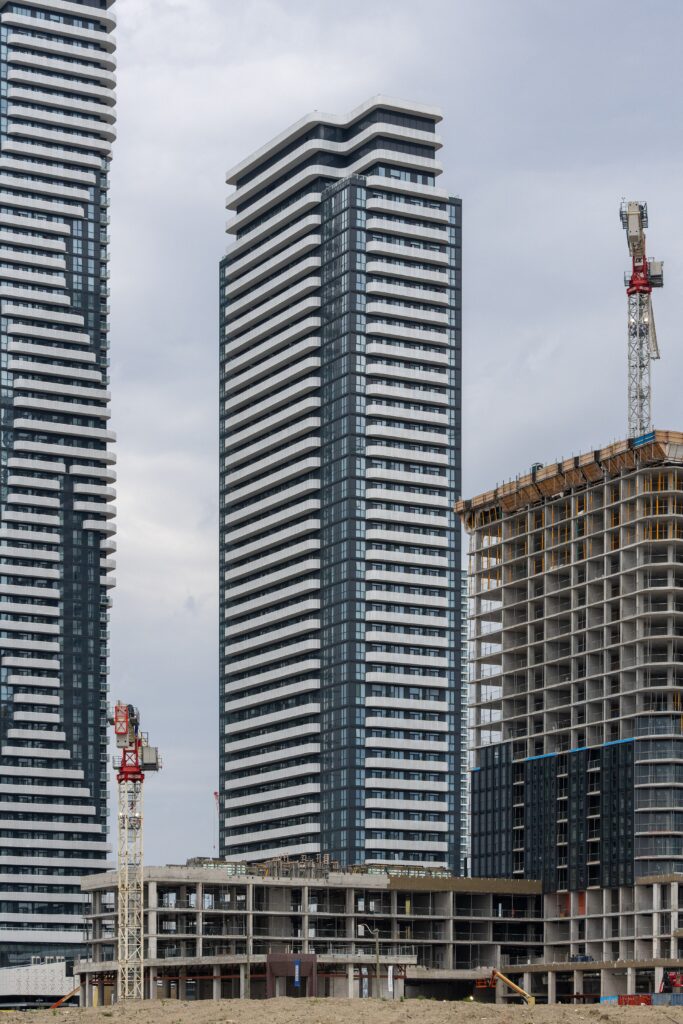
- Condos already well under construction with 2028–2029 occupancy, such as waterfront towers in Mississauga and mid-rises in Toronto with 2029 completion.
- Near-complete and move-in-ready inventory in buildings registering in 2026–2027, where developers are offering decor credits, capped charges and free assignment to clear remaining suites.
Our project database shows the expected occupancy on every page. If a project’s occupancy is 2030 or later, treat the relief as unavailable for a rental purchase unless the builder confirms otherwise in writing.
How the math changes: an illustration
Take a two-bedroom condo townhome bought at $550,000 before tax, a realistic entry price in the 905 in late 2026. These are illustrative assumptions, not a quote:
- Without the relief: 13% HST adds $71,500 to the price. Under the old rental rebate rules a unit at this price would have recovered only part of it.
- With the relief: the $71,500 comes off. Your all-in price is $550,000 plus closing costs instead of roughly $621,500.
- On a 20% deposit that is about $14,000 less cash in up front; on the mortgage it is about $57,000 less borrowed, which at a 5% rate is roughly $3,300 a year in interest you are not paying.
- On resale, the buyer of your unit in 2030 will not get this relief. You bought at a level that was 13% below what the same home costs the next owner.
None of that changes whether the rent covers the carrying cost, so model that on today’s rents and today’s rates. What it does is move the break-even on a rental purchase by more than any rate cut this decade.
Why the timing favours buying now rather than waiting for completion
Unsold completed inventory held by GTA developers hit a record 5,001 units in mid-2026 (Urbanation), and sales in completed buildings tripled while pre-construction sales fell 80%. Buyers have been voting for certainty. The relief rewards that: buy a near-complete or under-construction unit now, inside the window, and you get the tax relief and the certainty. Wait until after March 31, 2027 and the same unit costs 13% more.
Investor checklist before signing
- Confirm the completion date in writing and compare it with the December 31, 2029 rule for rentals.
- Ask how the builder will apply the relief: credited at closing, or paid by you and claimed back from the CRA. The federal and Ontario regulations were finalized in June 2026, and the CRA now processes these rebates.
- Check the rental rules of the building: minimum lease terms, whether short-term rentals are banned (they should be, for your purposes), and any rental-management programs the builder offers.
- Model the carrying cost at a stress-tested rate with realistic rent, condo fees, property tax and a vacancy allowance.
- Review the agreement with a lawyer for assignment rights, development-charge caps and closing adjustments. The ten-day cooling-off period on a new condo exists for this.
- Keep the paperwork. The relief has use conditions; keep your lease and proof of long-term rental use.
Which projects we would look at first
Without naming prices that change weekly, the rental-investor shortlist for the next six months looks like this: condo towns in Mississauga’s Lakeview Village with 2027–2028 occupancy from the mid-$500,000s; waterfront and Yonge-corridor condos under $600,000 with 2029 completion; and move-in-ready suites in Toronto, Vaughan and Pickering buildings that are clearing inventory with incentives. Browse them by price band and status on the projects page, or message us for the current price lists.
Get the rental-investor shortlist
We keep a live list of projects under $1,000,000 that complete before the end of 2029, with entry prices, deposit structures and the builder’s incentives. Send us your budget and target rent and we will send the ones that fit.
Check occupancy against the 2029 deadline: Aquanova at Lakeview Village targets July 2029 (tentative), and South Banks at Lakeview Village runs from March 2029 to January 2030 by block, so ask which suites or blocks are expected to finish in 2029 before you buy one as a rental. Compare both on our Lakeview Village page.
Chat with an expert on WhatsApp — an expert will reply within minutes — or browse every project with current pricing and use the form below to get price lists and floor plans.
Sources: Woitzik Polsinelli LLP via Mondaq, June 2026; Baker Tilly; Urbanation Q2 2026; KPMG, April 2026; CRA Notice 346, Ontario Enhanced New Housing Rebate (August 2026).
This article is general information from a real estate brokerage, not tax or legal advice. Rebate amounts, eligibility and timing rules are set by the federal and Ontario governments and can change; confirm your situation with the builder and a tax professional before you sign. Prices quoted are “from” prices published by builders or their co-operating brokerages on the dates noted and are subject to change.
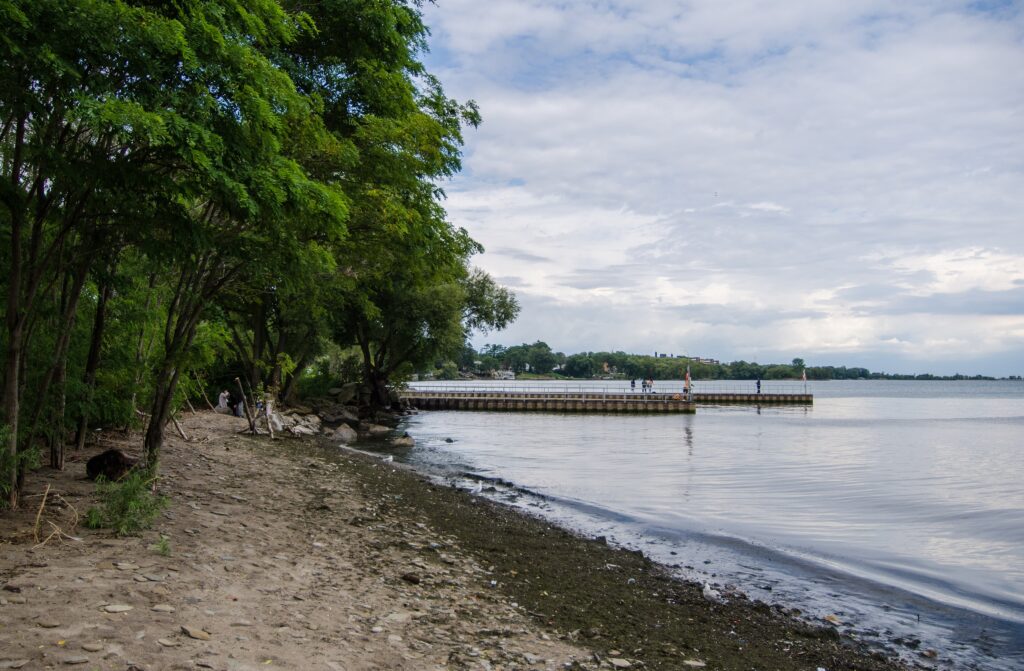
Cover photo: Lakefront Promenade Marina, Mississauga. Photo: Kevin Cabral, Wikimedia Commons, CC BY 2.0 (resized).